One sun-dappled Sunday in Post-Impressionist Paris, the first Neo-Impressionist artist―working under a parasol made of points of light, among several shading an idle parade of blasé bourgeoisie, passing a Sabbath of pleasureless leisure on an island in a Seine made of points of light―invents Pointillism.
“Some say they see poetry in my paintings; I see only science.”
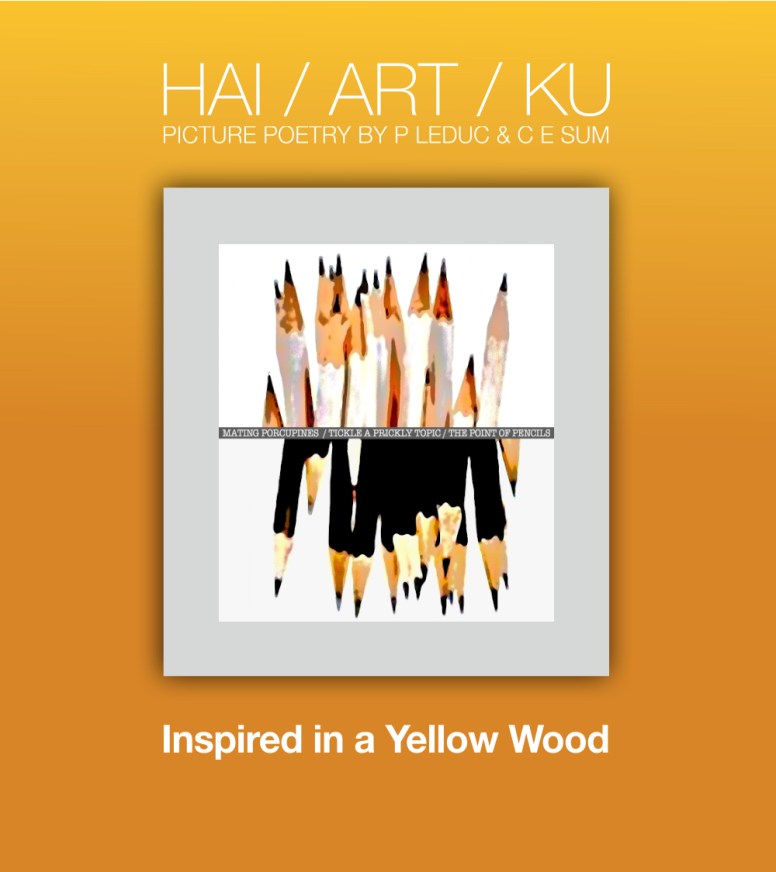
In a yellow wood, a pencil pusher, horning in to push pencils, comes to a fork in the road, where a Pulitzer poet is standing on the horns of a dilemma.
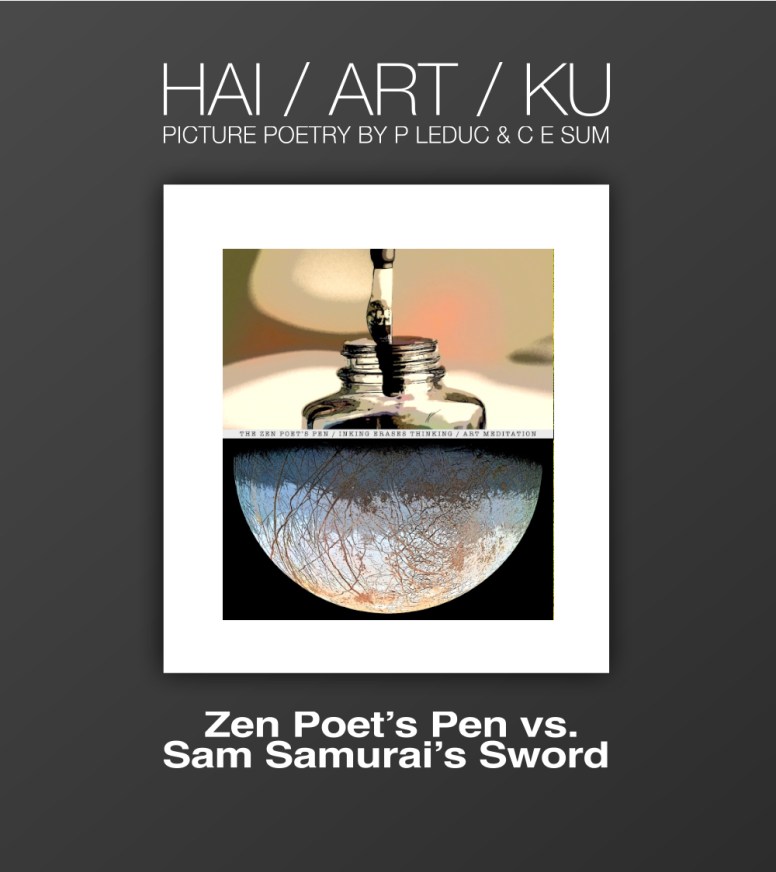
The Zen poet’s mind―still as an inkwell in an oil field; humble as a page of faint praise; silent as one hand clapping in a forest falling on deaf ears―is as sharp as Sam Samurai’s sword: like a steel stylus, shredding erudition into pulp fiction.
“Writing is a very focused form of meditation. Just as good as sitting in a lotus position.”
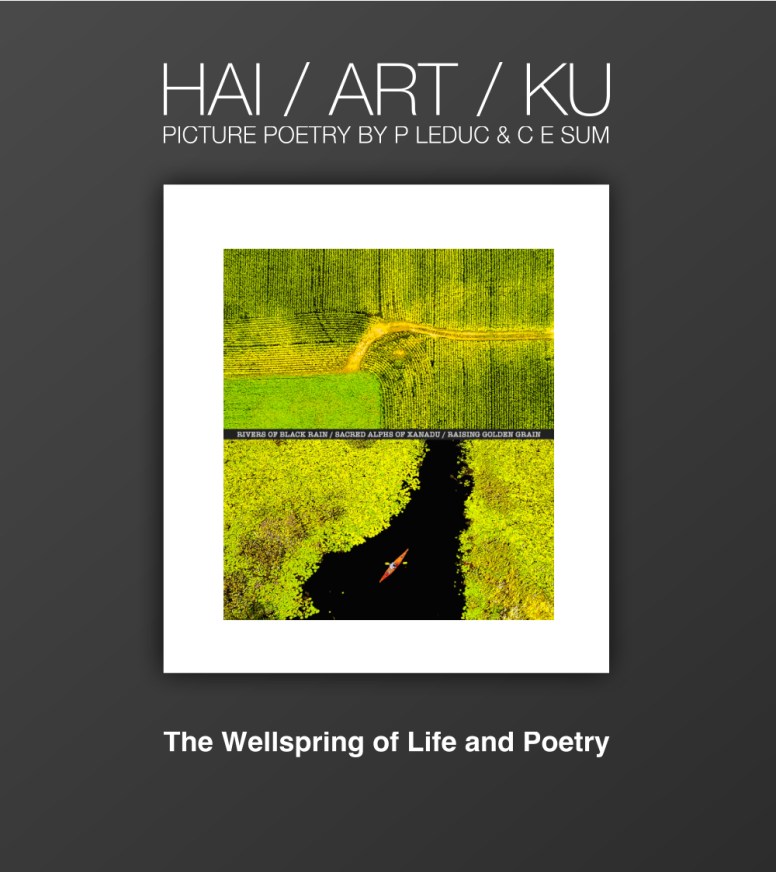
Suppose all the bird baths, ornamental ponds, swimming holes, creeks, swamps, lakes, oceans―all the water on the planet including what’s left of the glaciers, even the condensing vapor in the clouds―suppose it was all slurped up into a gob and spit into space: would that leave the planet dry?
“Among the planets orbiting the Sun, Earth is clearly the ‘water planet.'”
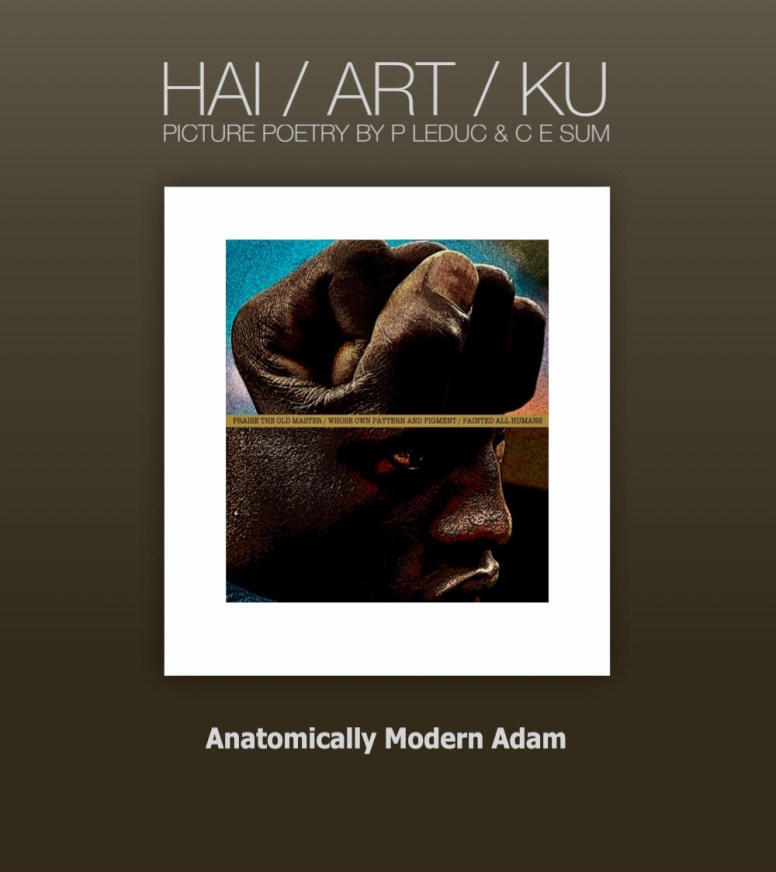
Ages before scientists traced the biblical Garden to the dark continent, Michelangelo painted “The Creation of Adam,” as if the first anatomically modern person were as pale as Pope Julius II, who paid for the job.
“The old master painter from the faraway hills
Painted the violets and the daffodills”




 GODSLAUGH.ME